Sweets and chocolate packaging
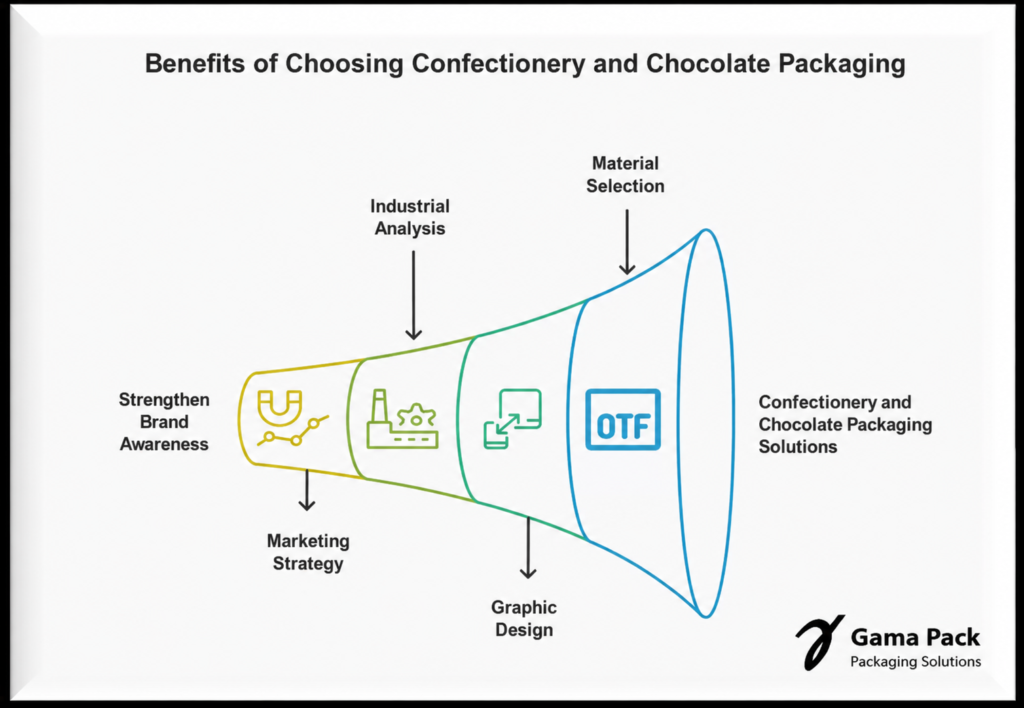
Gamma Pack Packaging, In the highly competitive confectionery and chocolate market, flexible packaging bags not only serve as a means of preserving product quality, but also as an important tool for enhancing visual appeal and stimulating sales. This guide is based on the principles of materials engineering, graphic design, industrial analysis and marketing strategy.
Its goal is to help manufacturers active in the domestic Iranian market and export markets – especially the Persian Gulf and Middle East countries – in choosing the most appropriate packaging solutions for confectionery products such as chocolate and wafers, toffee and dragees, biscuits, cotton candy and candies.
This article examines the scientific, industrial, design and commercial aspects of flexible packaging and shows how these elements can help grow a brand. The information has been compiled and updated with reference to industry sources such as Euromonitor and Packaging World to provide practical and actionable insights.
Graphic Design and Template Selection: Achieving Visual, Scientific, and Commercial Balance
The choice of graphics for candy and chocolate packaging is heavily influenced by the psychology of color and form. Packaging design, with a special emphasis on capturing the attention of the target audience, can significantly influence consumers’ purchasing decisions.
In 2025, global design trends such as organic shapes, minimalist styles and fruit-inspired colors – including peach, lime green, bright yellow and watermelon pink – have gained significant importance. These colors convey a sense of freshness and naturalness to consumers. From a scientific perspective, they are consistent with the principles of color psychology and the visual preferences of younger audiences, allowing brands to more effectively capture consumers’ attention.
In the Iranian and Middle Eastern markets, packaging design should also align with local cultural preferences. For example, bold, vibrant colors can convey energy, joy, and vitality for products like toffees and dragees. Meanwhile, minimalist designs with clean lines, simple graphics, and bold typography can be especially suitable for chocolate products aimed at children and teens.
Tactile and textured printing techniques, such as embossing, can add visual depth to packaging design and enhance brand differentiation. From a business perspective, personalized designs using QR codes that provide access to nutritional information and other product details can also facilitate digital marketing and consumer engagement.
Proposed 2025 Color Palette for Candy and Chocolate Packaging
| Color | Inspired name | Hex code | Suggested packaging removal |
|---|---|---|---|
| Peach | Peach Crack | #FFB07C | Soft, natural and friendly |
| Lime green | Lime green | #C7EA46 | Energetic, young and modern |
| Bright yellow | Bright yellow | #FFD300 | Happy, exciting and especially suitable for toffee products |
| Watermelon pink | Watermelon pink | #FF4F79 | Happy, energetic and attractive for children and teenagers |
Color Combinations: Using peach as the main background color and incorporating details in lime green or watermelon pink can create packaging that looks both natural and energetic.
- Brand Emphasis: Bold yellow is especially effective for logos or prominent elements like teardrops and QR codes because it immediately draws visual attention.
- Form and texture: Combining these colors with embossed printing or glossy lamination can significantly enhance the sense of luxury and distinction of the product.
Sustainability: Focus on environmental responsibility and social commitment
Sustainability is one of the key packaging trends in 2025. This includes the use of recyclable and biodegradable materials with a lower carbon footprint.
For confectionery and chocolate packaging, materials such as PE/PE mono-material structures and paper-film hybrids containing water-based coatings are increasingly being considered as alternatives to conventional plastic structures. The use of renewable energy sources, such as solar panels in manufacturing facilities, can further contribute to greener production.
This approach can help manufacturers comply with environmental regulations while also fostering consumer loyalty. According to consumer research and sustainability surveys, environmentally responsible packaging can create a more positive brand image among environmentally conscious consumers, including those in Middle Eastern markets.
The importance of materials engineering in candy and chocolate packaging bags
From a materials engineering perspective, the selection of packaging structures is primarily based on critical barrier properties, including oxygen transmission rate (OTR) and water vapor transmission rate (WVTR) .
These factors play an important role in preventing oxidation, protecting products from moisture, and increasing shelf life.
For example:
Matte metallized three-layer structure (PET/MET/PE)
This multi-layer structure includes a metallized layer that provides strong protection against light and oxygen transmission. It is particularly suitable for sensitive products such as chocolate and toffee and can help extend shelf life under appropriate storage conditions.
Technical analyses show that structures with an OTR of less than approximately 1 cc/m2/day can provide strong barrier performance, making them particularly suitable for export markets with warm climate conditions, such as Iraq and Oman.
Milky two-layer structure (OPP/CPP)
It is a cost-effective packaging option with excellent printability and is suitable for products such as candy and hard candies. Its moderate resistance to moisture makes it an attractive choice for local markets where production costs are of paramount importance.
Transparent two-layer structure (BOPP/CPP)
This structure offers high transparency and allows consumers to see the product directly. This structure is particularly suitable for cotton candy and fiber dragees, also known as sugar-coated confectionery products.
The engineering of this structure focuses on striking a balance between product visibility and protective function. However, for products that require long-term storage periods, additional protective layers may be recommended.

Comparison of packaging materials
The following table compares several packaging structures based on key technical and commercial criteria:
| Packaging materials | OTR (cc/m2/day) | WVTR (grams per square meter per day) | Approximate relative cost | Recommended use |
| Three layers of matte metallization (PET/MET/PE) | <1 | <0.5 | Medium to high | Chocolate, toffee |
| Milky double layer (OPP/CPP) | ۲–۵ | ۱–۳ | Less | Rock candy, hard candy |
| Transparent double layer (BOPP/CPP) | ۳–۶ | ۲–۴ | Low to medium | Cotton candy, dragee |
This comparison, based on common technical testing principles and standards in the packaging industry, including ASTM methods, can help manufacturers make more informed, data-driven decisions.

Structural design: industrial and functional aspects of multilayer flexible packaging
The structural design of flexible packaging bags is based on mechanical principles such as pressure distribution, load resistance, and package stability. A well-designed structure can minimize physical damage caused by handling, transportation, and external environmental conditions.
The main bag formats include:
Stand-up zipper bags
Stand-up pouches with a rectangular base, bottom gusset and zipper are particularly suitable for products intended for gradual consumption, such as biscuits and toffees.
The bottom gusset structure helps distribute internal stresses and improves the bag’s ability to maintain an upright position. On retail shelves, in confectionery stores, and in specialty stores, this format can improve product visibility and shelf presence.
Box bags
Box pouches, which have bottom and side seals and resemble a compact box, are especially suitable for fragile products such as wafers.
Their multi-panel printable surface offers significant branding opportunities. In many Middle Eastern markets, this format is gaining traction due to its premium look and distinctive visual appeal.
Center-seal and side-seal bags
Center-seam pouches provide a relatively large printable surface and are particularly suitable for smaller packages of products such as candy.
Gusseted bags, due to their structural configuration, can significantly increase the packaging volume relative to the space they occupy. Therefore, they are recommended for bulky and lightweight products such as dense or high-volume fleeces.
Mechanized heat sealing processes can create strong seals and help reduce the risk of packaging cracking or damage.
Efficient structural design can also help reduce material waste and manufacturing waste during the bag manufacturing process.

Advertising and Marketing Aspects: Increasing Sales Through Smart Packaging
From a marketing perspective, candy and chocolate packaging acts as a showcase at the point of sale and an important extension of the product’s brand identity.
Attractive graphics, combined with functional features such as easy-opening systems or butterfly zippers, can improve the consumer experience and reinforce the perception of product quality.
Market observations and performance data from manufacturers working with packaging suppliers have shown that premium multi-layer matte metallized packaging may increase consumers’ willingness to pay for certain chocolate products.
Additionally, manufacturers of products such as chocolate-coated candies, dragées, toffees, and coated chocolates often use transparent or windowed packaging for direct product viewing. This strategy can increase consumer trust by allowing customers to evaluate the appearance of the product before purchasing.
Future trends and case studies
In the future, smart packaging technologies that include features such as moisture indicators, freshness sensors, and augmented reality (AR) are expected to gain increasing attention.
To better understand the practical application of the principles discussed in this guide, the following examples illustrate packaging developments and approaches in Iran and the broader Middle East market.
Case Study 1: Al-Marai in Saudi Arabia
Almarai has incorporated a wide range of modern packaging solutions into its extensive product portfolio. Flexible packaging formats, including resealable pouch structures where required, can help improve operational efficiency, product protection and consumer convenience.
The flexibility of modern packaging machinery also allows manufacturers to customize packaging formats for products such as chocolate and biscuits, supporting product differentiation in the Middle East and North Africa (MENA) region.
Case Study 2: Sustainable Flexible Packaging in the Middle East and North Africa Region
A growing number of food and confectionery brands operating in the Middle East and North Africa region are focusing on sustainable flexible packaging and materials with a lower environmental impact.
This approach can strengthen consumer loyalty and improve brand perception, especially at regional trade shows and industry events where sustainable packaging has become an important factor in product differentiation.
Case Study 3: Packaging Production in Oman
Packaging manufacturers in Oman play an important role in supporting the logistics, retail, and food sectors through the production of a variety of packaging materials.
Their focus on production efficiency, material quality and sustainability highlights the strategic importance of packaging in regional supply chains and export markets, including the Gulf Cooperation Council (GCC).
Case Study 4: Iranian Chocolate Packaging Concept
In Iran, conceptual packaging designs that combine traditional patterns with contemporary colors have shown great potential for product differentiation.
Brands that integrate cultural visual elements into modern graphic design can strengthen their position in the domestic market while also creating distinctive products for export markets.
However, designers and manufacturers must also consider intellectual property issues and avoid excessive visual similarity to established international brands. This example illustrates the importance of achieving a careful cultural and commercial balance when designing packaging for Middle Eastern export markets.
Case Study 5: Dubai’s Viral Chocolate Phenomenon
The widespread popularity of pistachio-filled chocolate products inspired by Middle Eastern dessert traditions demonstrated the powerful relationship between product innovation, social media marketing, and packaging design.
Social media platforms have significantly increased global consumer awareness and demand for these products. This phenomenon has also demonstrated how rapidly changing consumption trends can impact ingredient demand, supply chains and export opportunities.
This example demonstrates the potential power of digital marketing and visually appealing packaging in generating international demand.
These case studies demonstrate how flexible packaging can help not only with product preservation, but also with export growth, consumer engagement, and brand development.
Conclusion
Choosing the right flexible packaging bag requires a careful balance between material performance, effective graphic and structural design, efficiency, and sustainability.
Manufacturers active in the chocolate and confectionery industry can use the principles outlined in this guide to improve product presentation, enhance perceived quality, and strengthen their position in competitive domestic and international markets.
By choosing the right materials to prevent intrusion, designing visually distinctive packaging, incorporating consumer-friendly structural features, and considering environmental responsibilities, brands can create packaging that goes beyond protecting the product. Effective packaging can also foster consumer trust, improve customer satisfaction, and support long-term brand growth.
Resources and references
- Mintel 2025: Packaging Industry and Market Insights
- Research into the impact of packaging on consumer purchasing decisions and emerging global packaging trends.
Mintel – Global Packaging Trends 2025 - Packaging World 2025: Oxygen Transmission Rates and Flexible Packaging with High Permeability
- An analysis of oxygen transmission rate (OTR) and the importance of barrier properties in flexible packaging applications.
Packaging World – Oxygen Transmission Rate and Barrier Properties of Flexible Packaging - Euromonitor International 2024: Flexible Packaging Market Research
- Market research that examines flexible packaging trends and the potential cost benefits of flexible packaging solutions.
Euromonitor International – Flexible Packaging in Western Europe - NielsenIQ: Environmental Excellence Survey – How Sustainable Packaging Impacts Consumers
- Consumer research examines how sustainability and eco-friendly packaging influence consumer preferences.
NielsenIQ – Unpacking Eco Excellence - Iran Chocolate Market Report
- Market research on the chocolate and cocoa-based food products market in Iran, including market trends and exports.
IndexBox – Iran Chocolate Market Analysis - Almarai Case Study: Flexible Packaging Solutions
- A case study that explores flexible packaging solutions for a wide range of food and consumer products.
Processing Magazine – Flexible Packaging Solutions Case Study - Richter Foods: Sustainability and Packaging
- Information about the Richter Foods Company, its sustainability initiatives and its approach to responsible packaging.
Richter Foods – About Us & Sustainability - Iranian Chocolate Packaging: Cultural Design
- An example of Iranian chocolate packaging that incorporates Persian cultural and artistic elements into its visual identity.
Global Brand Design – Iranian Miniature Chocolate Packaging - Dubai Viral Pistachio Chocolate: Packaging and Market Trends 2025
- A review of the Dubai Chocolate viral trend and its impact on pistachio chocolate demand, branding and international markets.
Compartes – Dubai Chocolate Viral Trend